Molokini Wildlife & Conditions Calendar
Planning your trip based on the season can dramatically change what you see. From Humpback whales in winter to the calmest waters in summer, here is the month-by-month breakdown.
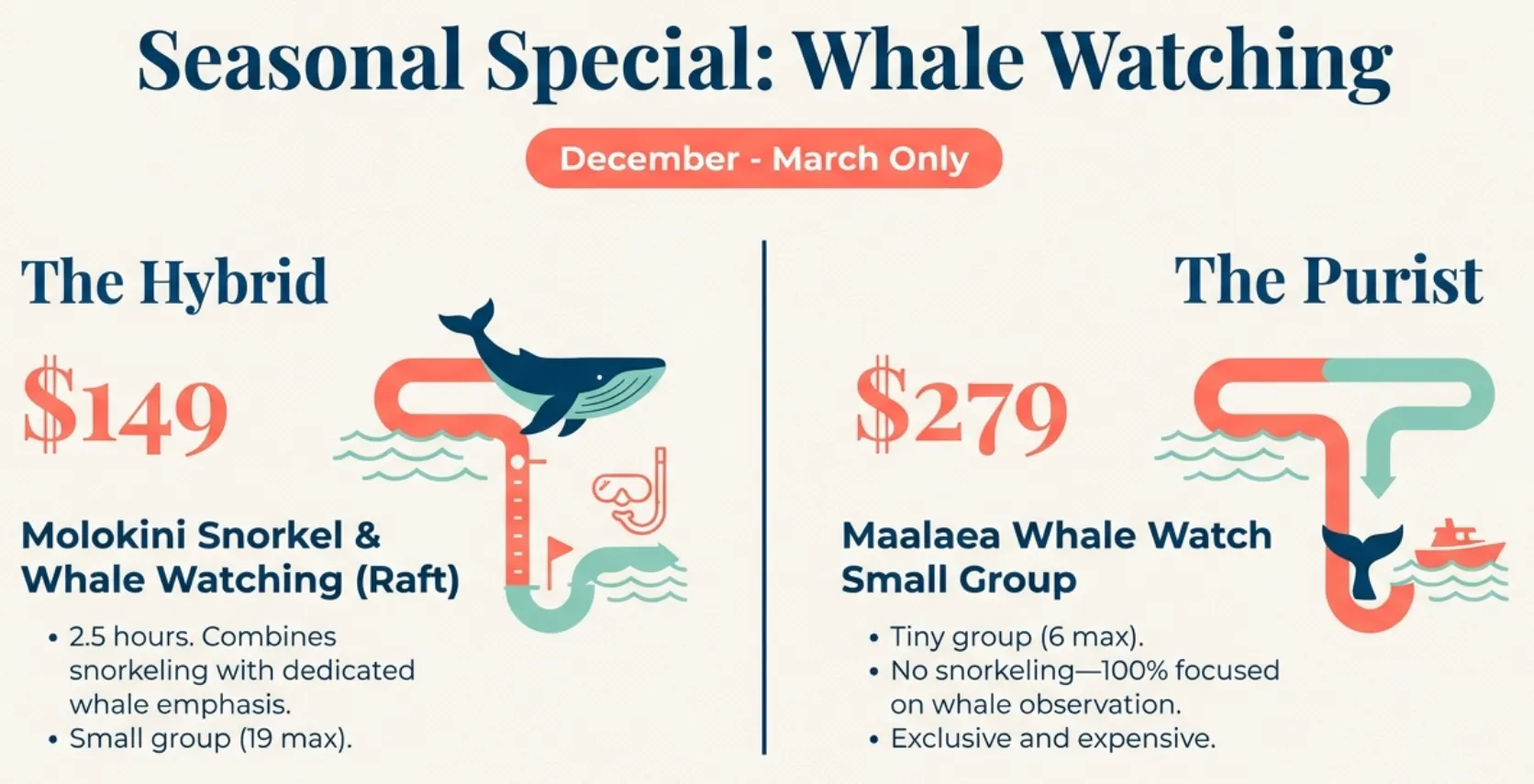
Winter (December - March)
Highlight: Humpback Whale Season!
During the transit to Molokini, you will almost certainly see whales breaching in the Ma'alaea Bay. **Conditions:** North swells make shore snorkeling difficult, but Molokini stays sheltered. **Visibility:** 80-120 feet.
Spring (April - June)
Highlight: Manta Rays & Turtles
Plankton levels can fluctuate, bringing in larger filter feeders. **Conditions:** Shoulder season offers a great balance of light winds and warm air. **Visibility:** 100-150 feet.
Summer (July - September)
Highlight: Exceptional Visibility
With minimal swells and light trade winds, visibility often hits its peak (150+ feet). Best for underwater photography. **Conditions:** Hot and glassy in the mornings. **Visibility:** 150+ feet.
Fall (October - November)
Highlight: Fewer Crowds
The "slow" season for tourism means fewer boats at the moorings. **Conditions:** Transitions to winter patterns; check forecasts as "Kona winds" can occasionally close the crater. **Visibility:** 100-120 feet.
Monthly Breakdown
| Month | Marine Life Hit | Water Temp |
|---|---|---|
| January | Whales (Peak) | 74°F |
| February | Whales (Peak) | 74°F |
| March | Whales | 75°F |
| April | Manta Rays | 76°F |
| May | Turtles (Turtle Town stop) | 77°F |
| June | Triggerfish | 78°F |
| July | Summer Visibility (Peak) | 79°F |
| August | Summer Visibility (Peak) | 80°F |
| September | Calm Mornings | 80°F |
| October | Quiet Reefs | 79°F |
| November | Early Whales | 77°F |
| December | Whales Arriving | 75°F |