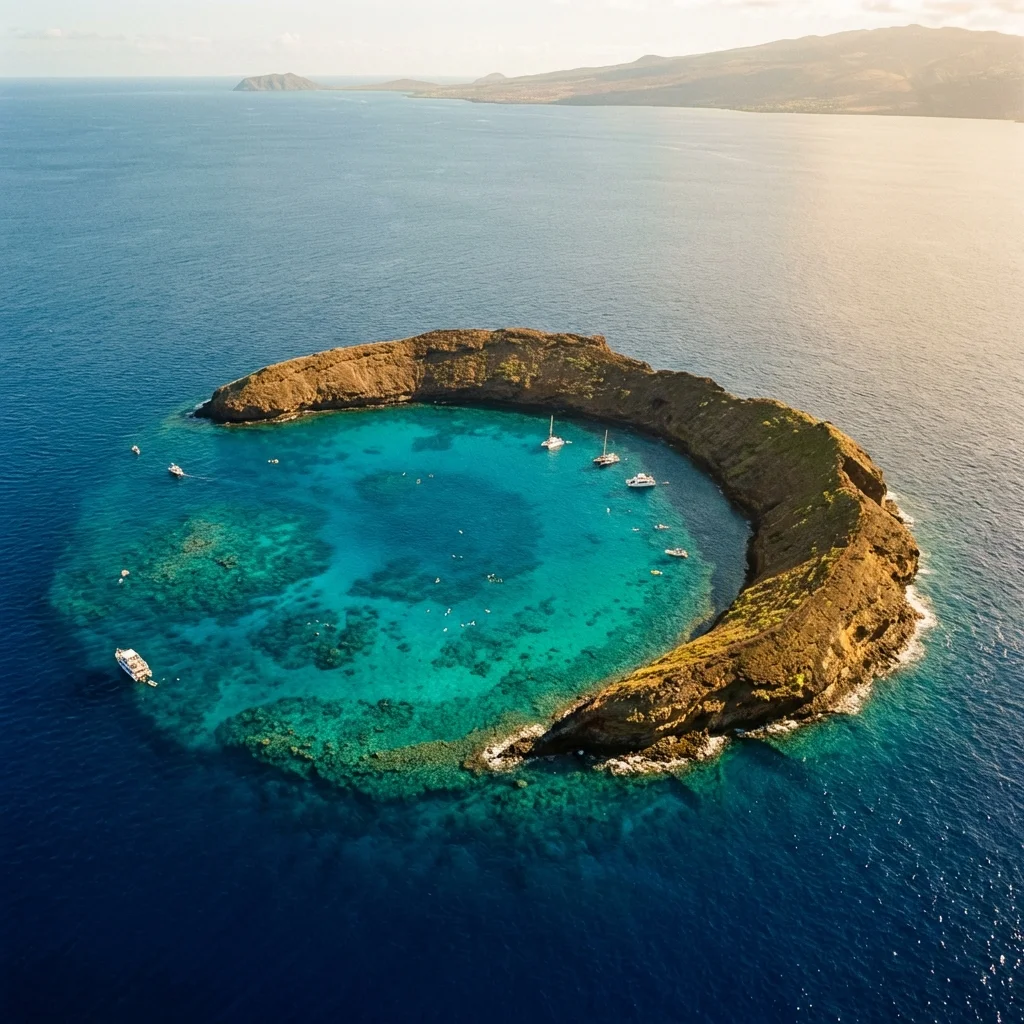
Molokini Crater: A Deep Dive into Geology & History
Molokini is more than just a snorkeling spot; it is a 230,000-year-old monument to Hawaii's volcanic power and a witness to iconic moments in Pacific history.
1. Geological Birth: Steam & Fire
While previously thought to be younger, potassium-argon dating by Kyoto University and the Hawaiian Volcano Observatory confirms Molokini erupted roughly 230,000 years ago.
- Vulcanian Explosions: Formed during Haleakala's southwest rift zone eruptions. As hot lava hit cool ocean water, massive steam explosions shattered the rock, creating the unique "cinder" topography.
- Volcanic Glass: Because the lava cooled so quickly, it formed high amounts of volcanic glass, which has since eroded into the dark yellow clay that gives the crater its distinctive color.
- The Sinking Rim: Molokini once stood 500 feet above sea level. Over millennia, wind and rain eroded the north rim until it sank below the surface, allowing the ocean to flow in and create the protected lagoon we see today.
2. Hawaiian Legend: The Fury of Pele
According to oral history, the fire goddess Pele fell in love with a prince who was a Moʻo (gecko). When the prince fell for another woman, Pele's rage was absolute. She cut the woman (or the prince, depending on the variant) in half. The head became Puʻu Olai (at Makena Beach) and the body became the crescent of Molokini.
3. Modern History: Practice & Preservation
The 20th century was tumultuous for the crater. Its isolated location and submarine-like shape made it a target for the US military.
- WWII Bombing: Used as practice for submarine and battleship strikes. Pilots used the long islet to hone their aim, leaving unexploded ordinances that weren't fully cleared until detonations in 1975 and 1984.
- Black Coral Pilfering: After the war, unregulated collectors stripped the reef of its famed black coral.
- MLCD Designation: In 1977, after years of public pressure, Molokini was finally designated a Marine Life Conservation District. Today, the reef has largely recovered, though unexploded ordinance removal remains an ongoing discussion for DLNR.